Colony Sequencing
The Easy Way

Direct Colony Sequencing makes it faster and easier to go from bacterial sample to sequencing data in a day. Submit your colony, culture, glycerol stock, or cell pellet, and we take care of the rest.


Skip the prep. We do the rest.

Whole plasmid colony sequencing empowers researchers to sequencing a sample directly from bacterial sample workflow for Oxford Nanopore sequencing. QuickPrep combines DNA preparation with Oxford Nanopore Technologies (ONT) long-read sequencing, giving you an easier way to sequence plasmids or bacterial genomes directly from bacterial starting material.

Send your bacterial colony, culture, glycerol stock, or cell pellet directly to Eurofins Genomics. We prepare the DNA using your selected method and then sequence it using Oxford Nanopore long-read technology.


No DNA extraction or plasmid purification required by your lab, although it is optional. We can handle the prep and sequencing for you.


Order in tubes


Order in plates


Starting material, size, cost, and turnaround
Starting material What to send Size Cost Est. Time
Liquid Culture
(recommended)
20–100 µL of cloudy culture in LB media. OD600 > 0.3 recommended. <20 kb $20 Same day
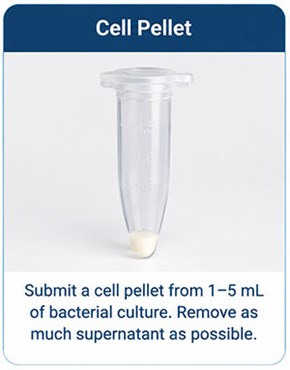
Pellet Submit a cell pellet from 1–5 mL of bacterial culture. Remove as much supernatant as possible before submission.
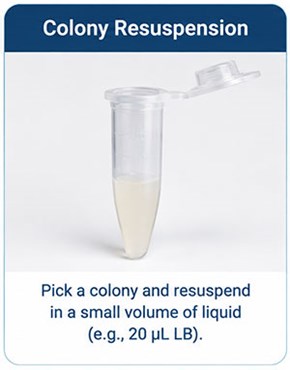
Colony, Resuspended Pick a colony and resuspend it in a small volume of liquid. No growth-up required. <20 kb $20 Same day
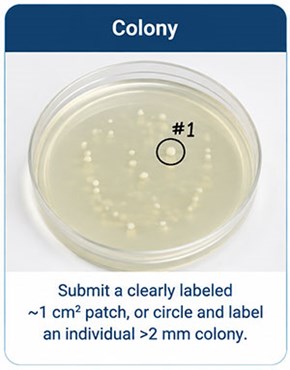
Colony, Agar Plate Submit a clearly labeled ~1 cm² patch, or circle and label an individual >2 mm colony. +1 day


Note: Sample acceptance and preparation requirements may vary by prep method. Please review the Sample Submission Guidelines before submitting samples. Only bacterial samples of biosafety level 1 are supported. Fungal colonies and other sample types are not accepted.

Many Options

One Workflow

We make it easy for customers by accepting all major colony sample types, and we figure out what prep is needed.


Sample Submission Guide

Transform your plasmid into E. coli or streak your glycerol stock onto an agar plate. Allow individual colonies to grow to at least 2 mm in diameter, with sufficient spacing between colonies to make picking easy. For low-copy plasmids, larger colonies are preferred to provide adequate starting material.

Standard EndA− E. coli cloning strains, such as DH5α, DH10B, and TOP10, generally provide the most reliable results.

EndA+ strains, including BL21 and some JM strains, may also be submitted; however, performance can vary depending on the strain and culture conditions. Residual nuclease activity may contribute to plasmid degradation and increase the likelihood of an unsuccessful sequencing result.

Important: This workflow is intended for E. coli. Other bacterial species are not supported.


1. Option 1: Liquid Culture
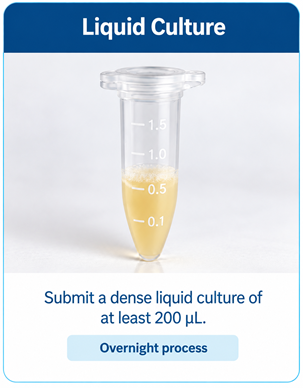
Liquid cultures are a convenient option for customers who already grow their clones prior to sequencing.

  • Inoculate a colony into 1–5 mL of LB media containing the appropriate selection antibiotic.
  • Grow the culture at 37°C with shaking at approximately 200–300 RPM.
  • Aim for an OD600 greater than 0.3 before submission. The culture should be noticeably cloudy.
  • Transfer 20–100 µL of the turbid culture into a 200 µL PCR strip tube for sequencing.


Cultures with very low cell density can contain insufficient bacterial biomass and may be more likely to produce unsuccessful results.


Since submitted material is not returned, retain the remaining culture for storage, additional growth, or downstream experiments.


2. Option 2: Cell Pellet

Grow your bacterial culture under the appropriate conditions for your strain and construct.

Transfer 1–5 mL of culture to a suitable centrifuge tube and centrifuge until a compact cell pellet forms. Carefully remove the supernatant without disturbing the pellet and remove as much residual liquid as possible.

Do not resuspend the pellet. Securely close and label the tube, then submit the cell pellet directly for EasyPrep and ONT sequencing.

What to submit: A cell pellet prepared from 1–5 mL of bacterial culture, with the supernatant removed.

 
3. Option 3: Colony

Select this option if you have not grown up your colony and need us to grow it OR if you are submitting a resuspended colony.
Colony

You can submit colonies directly on an agar plate, either as individual colonies or as labeled colony patches.

For colony patches:

For colony patches, create approximately 1 cm² patches, with each patch originating from an individual colony. Clearly number each patch so that it corresponds with the sample number in your sequencing order.

Allow the plate to incubate until visible bacterial growth has developed before submission.

For individual colonies:

Clearly circle and number each colony you would like sequenced. Colonies should be:

  • At least 2 mm in diameter
  • Well isolated from neighboring colonies
  • Clearly labeled to match the corresponding sample in your order

For low-copy plasmids, selecting larger colonies is recommended.

Before shipping, secure the plate lid with Parafilm and place the sealed plate inside a protective resealable bag. Do not use too much parafilm or it can cause issues when unwrapping. 


Colony - Resuspended

Colony resuspension provides a quick way to submit samples without preparing an overnight culture or performing a plasmid extraction.

  • Select a well-isolated colony measuring at least 2 mm in diameter.
  • Transfer the colony into 20 µL of LB media in a 200 µL PCR strip tube or compatible 96-well plate.
  • 10 µL of water may also be used, but LB media is preferred because water-based submissions may have a greater risk of insufficient sample input.
  • Transfer as much of the colony as possible and mix thoroughly until the cells are evenly suspended.
  • The finished suspension should appear visibly cloudy, indicating sufficient bacterial material.
  • Submit the remaining suspension in the appropriate PCR strip tube or plate.


Tubes (<48 samples)

200 μL PCR 8-strip tubes 

  • Write the 3-character barcode on the side of the tube in clear handwriting using a thin sharpie marker. The order page automatically generates this barcode for you to make it easy.
  • Do not write the sample name on the tube. The barcode (previous point) is enough. Adding the name typically slows down processing instead of speeding it up.
  • The barcode is your initials followed by a number, e.g. John Doe would get the barcode JD1…JD2…JD3…etc.
  • If using our free barcodes, press down firmly across the entire label to make sure it is secure.
  • Always start on 1. If there are samples already sitting in your cart that start at 1, the order page will display the next available number, which is fine to use. 
 

Plates (>48 samples)

200 μL 96 well plate

  • Write the order number along the side of the plate using a thin sharpie marker.
  • After the order number, write ONT for Oxford Nanopore Samples (whole plasmid) or an S for Sanger samples.

  • Make sure all handwriting is legible. 
  • Do not submit less than 48 samples per plate. 
  • Do not skip wells. 
  • Arrange samples by column (preferred.
 

Tubes (<48 samples)

200 μL PCR 8-strip tubes 

  • Put the 8-strip inside a 50mL conical tube to protect during transit. It is a good idea to add some cushioning inside such as bubble wrap or cotton balls.
  • Print your order confirmation page, fold it so that the order barcode and sample information is on top, and place the tube(s) and confirmation page in a ziplock bag.
  • Do not cut up the 8-strip into separate tubes.
  • Make sure the caps are firmly closed. Do not use the 8-strip tubes with caps that come off easily. An easy way to distinguish between them is to look if the tubes have individual caps or a strip of caps. Strip caps come off easily and should be avoided. Individual caps typically fit more snuggly.
  • Do not use excessive parafilm to seal the tubes. This makes it difficult to open the tubes and can lead to contamination when opening the tubes. The conical tube should be enough to protect them in transit.


Separate Sample Types into Separate Bags 

  • It is important to separate Whole Plasmid and Sanger samples into different ziplock bags so the processing team can quickly sort packages and send the samples to the right sequencing group.
  • Include the order confirmation page in each bag, with the order barcode and sample information visible through the bag.


Plates (>48 samples)

200 μL 96 well plate
  • Heat seal is preferred. If using a roller on an adhesive seal, press down firmly and evenly across the entire plate to make sure it is securely sealed across all wells.
  • It is critical that plates are sealed well to avoid leakage and cross contamination between wells.
    • Inspect the seal for bubbles. Bubbles can cause cross contamination if liquid can pass between wells.
    • Wrap plates individually with bubble wrap to protect them.
  • Do not use cap strips on plates. These can cause cross contamination between wells when pulling them off.
  • Avoid stacking multiple plates on top of each other. The wells from the top plate can piece the seal of the plate underneath.

Agar Plate

  • Wrap the agar plate in parafilm to prevent leakage and place inside a ziplock bag.


For more details, go to the How to Submit Samples webpage.

Dropbox

  • Drop samples in the box the same day the online order is placed. The courier pickups samples on-demand, not every day. If it is past the cutoff time, the courier will pickup the following business day.
  • Package your samples in padded mailer, padded envelope or cardboard shipping box. If you are reusing material, completely remove or cover any existing labels or warnings. Multiple orders may be shipped together in the same package, provided that each order is placed in its own sealed bag and includes the corresponding order confirmation.
  • Ship samples at ambient (room) temperature. Do not include ice packs, dry ice, or other temperature-control materials.
  • Visit the dropboxes webpage for more information on dropbox options and details.
  • Search for dropboxes near to your location.
  

Digital Shipping Label

  • Select the digital shipping label option during checkout. It is found under the "sample submission method" option. Digital shipping labels are free as long as the order amount meets the threshold for free shipping, which usually around $30-35. 
  • A digital shipping label will be automatically generated on the order confirmation page. Print it. 
  • Cut out the shipping label Select the print option to print the label.
  • Package your samples in padded mailer, padded envelope or cardboard shipping box. If you are reusing material, completely remove or cover any existing labels or warnings. Multiple orders may be shipped together in the same package, provided that each order is placed in its own sealed bag and includes the corresponding order confirmation.
  • Ship samples at ambient (room) temperature. Do not include ice packs, dry ice, or other temperature-control materials.
  • For more information, visit the Digital Shipping Label webpage.
  

Ship Normally


  • Package your samples in padded mailer, padded envelope or cardboard shipping box. If you are reusing material, completely remove or cover any existing labels or warnings. Multiple orders may be shipped together in the same package, provided that each order is placed in its own sealed bag and includes the corresponding order confirmation.
  • Ship samples at ambient (room) temperature. Do not include ice packs, dry ice, or other temperature-control materials.
  • Ship using your company's standard shipping carrier (UPS, Fedex, DHL, etc). We strongly recommend shipping via the express option, e.g. overnight, next-day, express, first-class.
  • For more information, visit the Ship Normally webpage.


FAQ / Common Questions

Go to the FAQ page for all questions and answers regarding Whole Plasmid / Nanopore Sequencing.


Ready to sequence your colony?

Liquid culture, pellet, or colony straight off the plate — pick your format, ship it to us, and skip the DNA prep entirely. Most orders are sequencing within 24 hours of arrival, with data delivered straight to your MyOrders page.


Order Now

How QuickPrep works  

Same Powerful Nanopore Sequencing. Less Work Before You Submit.


Why Choose QuickPrep?

Less Prep. More Sequencing. Traditional sequencing workflows require you to grow the colonies up, culture samples, extract or purify DNA, check DNA concentration and quality, and prepare samples for submission. QuickPrep simplifies the process.


You provide the bacterial sample. We take it from there.

✓ No Mini Prep required in your lab  
✓ Long-read ONT sequencing  
✓ No primers required  
✓ No genomic DNA extraction required in your lab  
✓ Simple, easy sample submission  


library-icon

1. Submit sample

Culture, pellet, colony
library-icon

2. No Prep Req.

We handle the prep step
library-icon

3. Sequencing

Long-read sequencing
connect-img

Ordering a colony sequencing service?

Plasmid Colony Sequencing and Bacterial Genome Sequencing use the same workflow but return very different data. If you're not sure which one fits your sample, see the comparison below before you order.


Explore the difference below link-arrow

Plasmid vs. Genome Sequencing for Colonies

Eurofins Genomics offers both whole plasmid and whole genome sequencing for bacterial samples.  Customers can submit bacterial samples using either option. Both services accept the same sample types. Since both services involve bacterial samples, it is important to distinqush between the two services.

ccept bacterial samples as the starting material for Oxford Nanopore sequencing. By using Nanopore sequencing for bacteria, you can optimize your workflow and concentrate on other lab priorities. Our sequencing team will isolate and sequence the plasmid, delivering the sequencing results in as little as two business days. You can easily submit bacterial colonies, glycerol stocks, or liquid cultures using two different service levels.

I. Whole Plasmid Sequencing for Colonies

Ideal for verifying the complete sequence of a plasmid directly from bacterial starting material.

Service: Whole Plasmid Sequencing

Sample Types Accepted

  • Liquid Cultures
  • Cell Pellets
  • Colonies in Agar plate 
Data / pipeline: standard pipeline used for whole plasmid sequencing
Pricing: starting at $20 ($15 sequencing + $5 prep)
Prep required: internal proprietary process
How to order: select one of the options named "QuickPrep" on the order page

II. Bacterial Genome Sequencing for Colonies

Ideal for bacterial genome characterization, genome assembly, and investigation of chromosomal features. Bacterial Genome sequencing is designed for the comprehensive analysis of entire genomes. It involves the sequencing and assembly of genomic DNA (gDNA) derived from a clonal population, specifically a singular bacterial species.  Learn more.

Service: Bacterial Genome Sequencing

Sample Types Accepted

  • Liquid Cultures
  • Cell Pellets
  • Colonies in Agar plate 
Data / pipeline: special workflow and bioinformatics pipeline designed to sequence the entire genomes.
Pricing: starting at $90
Prep required: extraction
How to order: select "Bacterial Genome" on the order page.

Testimonials

“Always a pleasure doing business with you! Excellent service and turnaround times! I have worked with Eurofins for 10 years, ever since I was a graduate student. My current lab used to order oligos and sequencing from other suppliers but I convinced them to switch to Eurofins. I advocate for you regularly to all of my lab colleagues.”

Bina N.

Bina N.

Customer

“Easy to navigate and order oligos. I order multiple oligos at once, each with similar specifications—purification, scale, and more—but with different sequences. The ability to set the default values after entering the first oligo made the process much faster and easier. I especially liked that feature.”

Dara L.

Dara L.

Customer

“Excellent quality oligo synthesis services”

Mona a.

Mona a.

Customer

“Best Oligo ordering system I've ever used, and I've been ordering oligos since 1992!”

Bobb PhD

Bobb PhD

Customer

“We have been struggling with oligo quality from other providers. The ones we received from you are far and away the highest quality we have observed and at much higher yields and uniformity than we have seen elsewhere. We are incredibly impressed with the quality and have already started recommending Eurofins to collaborators and other colleagues.”

Andrew A.

Andrew A.

Customer

“I have been using Eurofins since the past 20 years as a Lab Manager of an academic research lab in Toronto. I have found Eurofins Oligo service to be excellent in all respects. Great job Team Eurofins :)”

Talat A.

Talat A.

Customer

“You make the best primers. I love that you're able to get them to me in 24 hours with next-day shipping on oligos <= 40 bp. Free shipping, too. I've used your service for 4 of our lab's upcoming papers, and the quality is outstanding.”

Ben C.

Ben C.

Customer

“Great oligonucleotides, especially at longer lengths. Eurofins is able to process primers longer than 60 mers without requiring much longer involvement in terms of price and time.”

D. Levashova

D. Levashova

Customer

“Easy to navigate and order oligos. I order multiple oligos at once, each with similar specifications—purification, scale, and more—but with different sequences. The ability to set the default values after entering the first oligo made the process much faster and easier. I especially liked that feature.”

K. Shearer

K. Shearer

Customer

“I've been using Operon (now Eurofins) since 1999. I've tried other vendors, but neither the quality nor the service ever matched that of Eurofins.”

Jan D.

Jan D.

Customer

Related Products

Bacterial Genome Sequencing

Whole-genome sequencing for characterizing a bacterial strain.

Whole plasmid sequencing

Full-length, high-accuracy sequencing of your plasmid construct.

// start - Hubspot script file load and caching fo 15 days // End - Hubspot script file load and caching fo 15 days